Products packaged in squeezable bottles and tubes need labels that can move with the container without sacrificing appearance or performance. From shampoo and lotion bottles to condiments, cleaning products, and specialty foods, flexible packaging presents challenges that rigid containers simply do not.
Every time a customer squeezes the package, the container changes shape. A label that is too stiff may wrinkle, crease, bubble, or begin lifting around the edges. Even a beautifully designed label can quickly look worn if its material and adhesive are not suited for the package.
Choosing the right labels for squeezable containers requires looking beyond the printed design. The label material, adhesive, container shape, surface material, environmental conditions, and frequency of use can all affect how well the finished label performs.
Understanding these factors can help businesses choose labels that maintain their appearance throughout the life of the product.
Why Squeezable Containers Need Different Labels
A label applied to a rigid glass jar or sturdy box does not experience much movement after application. Squeezable packaging is different.
Flexible containers bend and change shape every time the product is used. The label needs to accommodate this movement.
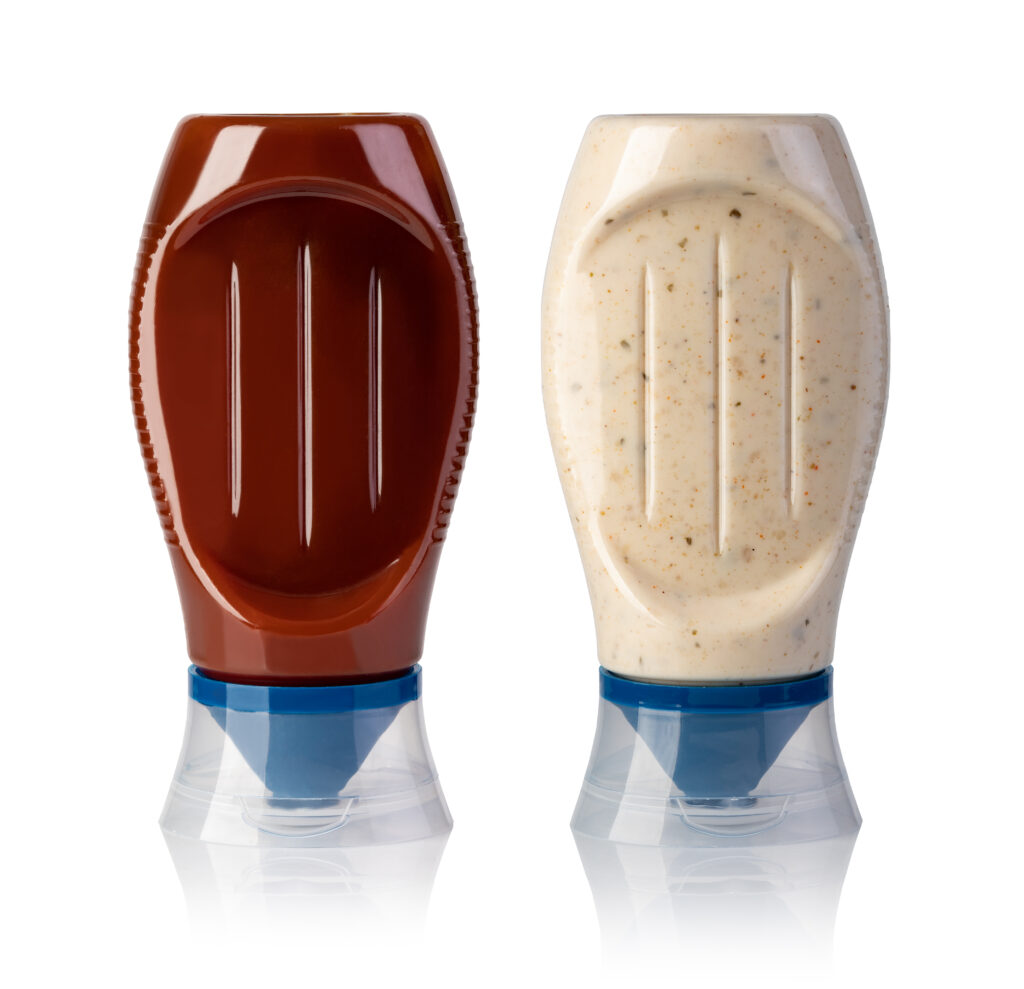
Squeezable packaging can include:
- Shampoo and conditioner bottles
- Lotion and cosmetic containers
- Condiment bottles
- Honey containers
- Sauces and dressings
- Cleaning products
- Automotive products
- Personal care products
- Pharmaceutical products
- Flexible tubes
If a traditional rigid label material is placed on one of these containers, the container may flex while the label tries to maintain its original shape.
The result can be creasing, edge lifting, bubbling, or permanent distortion.
Label material manufacturers specifically recommend more conformable films for squeezable containers because these materials can flex repeatedly without the dimensional distortion and creasing associated with more rigid constructions.
Flexibility Is One of the Most Important Factors
When selecting labels for squeezable containers, flexibility should be one of the first considerations.
The label needs to move with the package.
Flexible film materials can conform to the container as it bends and then recover as the package returns toward its original shape. This allows the label to remain smoother and helps preserve the printed design.
Polyethylene films are one option commonly associated with highly squeezable packaging because of their flexibility. Other conformable and semi conformable films may be appropriate depending on how much the container actually moves.
Not every squeezable package requires the same degree of flexibility, however.
A thick plastic bottle that flexes slightly when squeezed has different requirements than a thin cosmetic tube that bends dramatically during every use.
This is why the package itself should always be considered when selecting the label construction.
Understand How Much the Container Flexes
Squeezable containers generally fall somewhere along a spectrum from slightly flexible to highly flexible.
Semi Squeezable Containers
Some bottles maintain most of their shape but flex slightly when pressure is applied.
Examples might include certain shampoo bottles, cleaning product containers, and beverage bottles.
A semi conformable film may provide enough flexibility for these applications. Avery Dennison, for example, identifies semi squeeze films as suitable for bottles with slight compound curves.
Highly Squeezable Containers
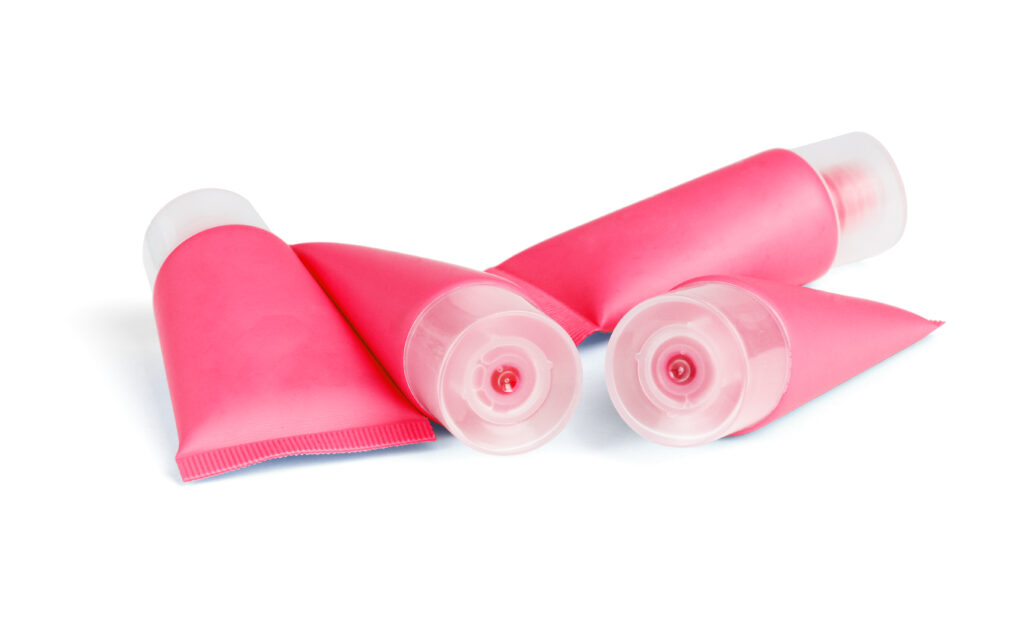
Other packages undergo significant deformation during normal use.
Flexible tubes and thin wall bottles are good examples.
These applications usually require a more conformable label material that can move repeatedly with the package.
Matching the label’s flexibility to the actual movement of the container helps prevent premature label failure.
Choosing the Right Label Material
Material selection has a major influence on how labels for squeezable containers perform.
Film materials are often a strong choice because they combine durability with flexibility.
Polyethylene
Polyethylene, commonly referred to as PE, offers excellent flexibility and is frequently used for tubes, curved containers, and thin wall packaging.
Its ability to flex makes it well suited for containers that undergo repeated squeezing.
Polyolefin and Conformable Films
Conformable films can provide another option when packaging has curves or requires greater flexibility than traditional rigid films can provide.
These materials can help reduce edge lifting while maintaining the appearance of the printed label.
Polypropylene
Polypropylene, or PP, is widely used in product labeling and can offer excellent clarity and print appearance. However, more rigid PP constructions may not be appropriate for highly squeezable packages.
The amount of movement in the container should therefore be evaluated before choosing the material.
Why Paper Labels May Not Be the Best Choice
Paper labels can be economical and attractive, but they generally do not provide the same flexibility as film.
Repeated squeezing can cause paper to:
- Wrinkle
- Crease
- Tear
- Crack
- Lift around the edges
- Show permanent deformation
Moisture can create additional problems.
Consider a shampoo bottle that is squeezed regularly while sitting in a wet shower. The label must withstand both repeated movement and frequent exposure to water.
Film labels are often better suited to these demanding environments because filmic materials can provide flexibility along with moisture resistance.
Adhesive Selection Is Just as Important
Choosing the correct face material is only part of the process.
The adhesive underneath the label needs to maintain contact with the container as both the package and label flex.
A poor material and adhesive combination can result in labels that initially look perfect but begin lifting after repeated use.
Factors affecting adhesive selection include:
- Container material
- Surface texture
- Container shape
- Application temperature
- Storage temperature
- Exposure to moisture
- Exposure to oils or chemicals
- Expected product lifespan
The right combination of facestock and adhesive is critical to real world label performance.
Consider What the Container Is Made From
Two containers that look almost identical can behave very differently depending on the plastic used to manufacture them.
Common packaging plastics include PET, HDPE, LDPE, and polypropylene.
The surface characteristics of these materials can influence how an adhesive bonds to the package.
For this reason, selecting labels for squeezable containers should involve testing the label on the actual package whenever possible.
The bottle’s flexibility, surface material, shape, and environmental exposure should all be considered together rather than independently.
Container Shape Can Create Additional Challenges
Squeezing isn’t always the only issue.
Many flexible packages also have complicated shapes.
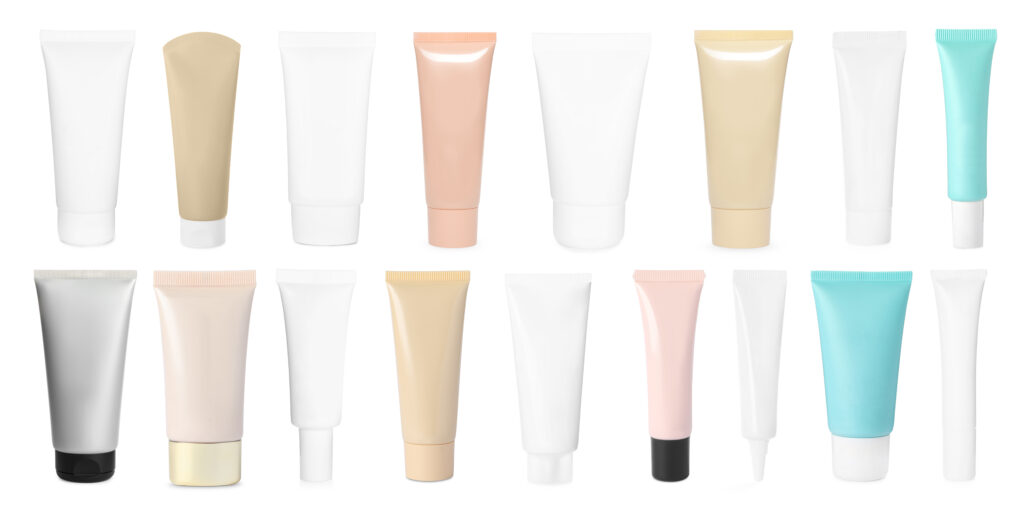
They may include:
- Compound curves
- Narrow sections
- Tapered sides
- Rounded surfaces
- Recessed areas
- Small diameter sections
A stiff label may attempt to return to its original flat shape after being applied to a curved surface. This tension can contribute to edge lifting.
Conformable films are specifically designed for applications involving irregular shapes, curves, and flexible containers.
The more complicated the package geometry becomes, the more important material selection becomes.
Think About the Product’s Environment
Where will the product actually be used?
A label for a squeezable honey bottle stored in a pantry experiences very different conditions than a body wash bottle sitting in a shower.
Potential environmental factors include:
- Water
- Humidity
- Refrigeration
- Oils
- Chemicals
- Sunlight
- Heat
- Temperature fluctuations
- Frequent handling
Labels for squeezable containers should be designed for the complete product lifecycle, not simply how the package looks immediately after labeling.
Labels generally need to remain attached and legible throughout their intended life, with temperature, moisture, product lifespan, printing requirements, and end use all affecting material selection.
Moisture Resistance May Be Essential
Many products sold in squeezable containers are regularly exposed to water.
Shampoo, conditioner, lotion, body wash, household cleaners, and certain food products may all encounter moisture during normal use.
Film materials provide an advantage in these situations because they do not absorb water the same way traditional paper materials can.
Protective coatings or laminates can provide additional protection for the printed surface when necessary.
The finished label should remain readable and visually appealing even after repeated handling.
Don’t Forget About Oils and Chemicals
Some squeezable products contain substances that can affect label performance.
Examples include:
- Cooking oils
- Salad dressings
- Automotive chemicals
- Lotions
- Cosmetics
- Cleaning products
If these substances come into contact with the label, the face material, ink, coating, and adhesive may all be affected.
Discussing the product contents and expected exposure with your label manufacturer can help identify a construction capable of handling those conditions.
Printing and Finishing Affect Durability
The material underneath the artwork is important, but so is the way the label is printed and finished.
Labels that experience frequent handling may need additional protection against scuffing and abrasion.
Depending on the application, options can include protective varnishes and laminates.
Avery Dennison notes that overvarnishing can be appropriate where increased scuff resistance is required on certain conformable film constructions.
These finishing choices can help maintain color, branding, and readability as consumers repeatedly handle and squeeze the package.
Consider the Desired Appearance
Performance does not mean sacrificing shelf appeal.
Modern film materials provide businesses with numerous design possibilities.
Clear films can create a seamless appearance where graphics seem to be printed directly on the container. White films can provide a strong background for vibrant graphics, while specialty finishes can help differentiate a product on crowded shelves.
Highly conformable clear films can even combine flexibility with the popular no label appearance on transparent or uniquely shaped containers.
The goal is to balance appearance with performance.
Test Labels Before Full Production
Testing is one of the best ways to determine whether a label construction is appropriate.
Whenever possible, labels should be evaluated using the actual container and realistic conditions.
Testing can include:
- Applying the label to the finished container
- Repeatedly squeezing the package
- Checking for edge lifting
- Looking for wrinkles or creases
- Exposing the container to moisture
- Testing under expected storage temperatures
- Evaluating the label after extended use
Real world testing can uncover problems that aren’t obvious immediately after application.
Material suppliers and converters routinely evaluate facestocks, adhesives, printing processes, packaging, temperature, and humidity when troubleshooting label performance.
Common Signs You Have the Wrong Label
Businesses should pay attention when labels begin showing signs of failure.
Common warning signs include:
- Corners lifting
- Wrinkles appearing after squeezing
- Permanent creases
- Bubbling
- Cracking
- Label distortion
- Ink rubbing away
- Labels separating from the container
These problems aren’t simply cosmetic.
Packaging is an extension of your brand. A damaged label can make an otherwise high quality product appear poorly manufactured or old.
Addressing the label construction can help prevent these problems before products reach customers.
Work With a Label Manufacturer That Understands the Application
There isn’t one universal material that works for every flexible package.
The best labels for squeezable containers are chosen by considering the entire application, including the package material, amount of flexibility, environmental exposure, adhesive requirements, printing process, desired appearance, and product lifecycle.
Working with an experienced label manufacturer allows these factors to be evaluated together.
Instead of simply choosing a label based on appearance or price, businesses can develop packaging that performs properly from production through repeated consumer use.
Conclusion
Squeezable packaging creates unique challenges that standard labels may not be equipped to handle. Every time the package bends, compresses, or returns to its original shape, the label must respond without excessive wrinkling, lifting, cracking, or distortion.
Choosing labels for squeezable containers starts with understanding how flexible the package is and selecting a material capable of moving with it. Adhesive performance, container material, package shape, moisture exposure, product contents, printing, and finishing should also be considered before making a final decision.
The result should be a label that looks just as professional during use as it did when the product first left the production line.
If you’re trying to determine the best labels for squeezable containers for your product, contact us here. North American Label can help you evaluate your packaging requirements and develop a custom labeling solution designed for the demands of your specific application.
Further Reading
Avery Dennison Conformable Film Label Solutions
Avery Dennison Film Label Materials